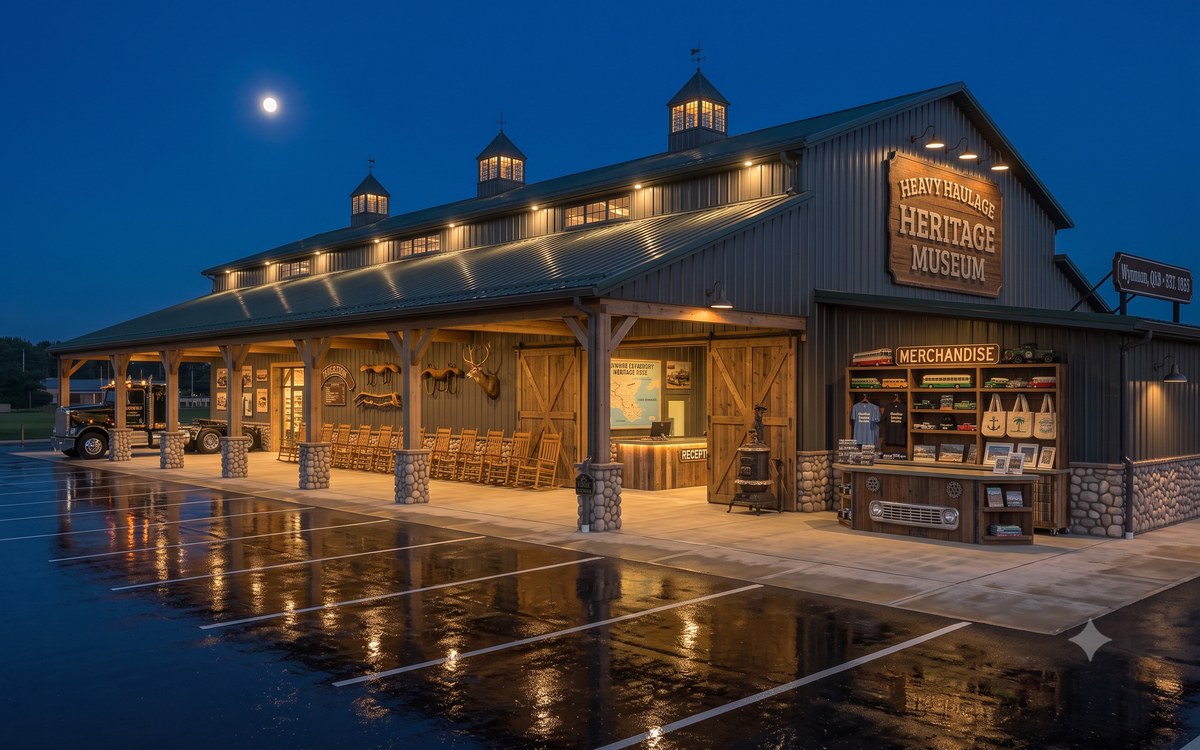
The Front Facade
The public face of the building — a wide entry canopy, signage bay and the arrival forecourt where visitors first meet the collection.
Australia's first museum dedicated to the machines and the people of the heavy haulage industry — and the building designed to hold them.
The Vision
Right now the collection lives in a working depot. Trucks are restored, wheeled out for open days, and put back under cover. There is nowhere permanent for the public to come and see them.
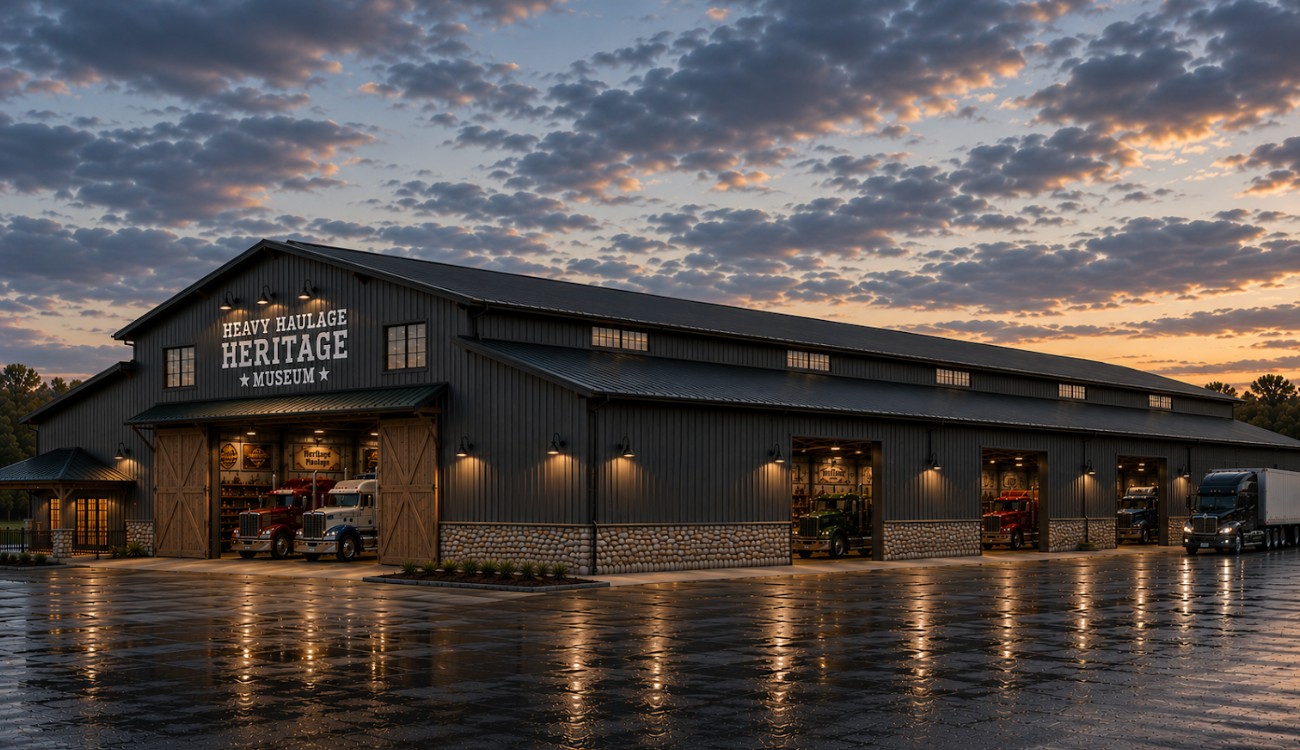
This is the building that changes that — a purpose-built exhibition hall sized around the machines themselves, not retro-fitted into a shed that was never meant to hold a road train.
Every dollar raised through memberships and raffles goes toward making it real.
Concept Renders
The public face of the building — a wide entry canopy, signage bay and the arrival forecourt where visitors first meet the collection.
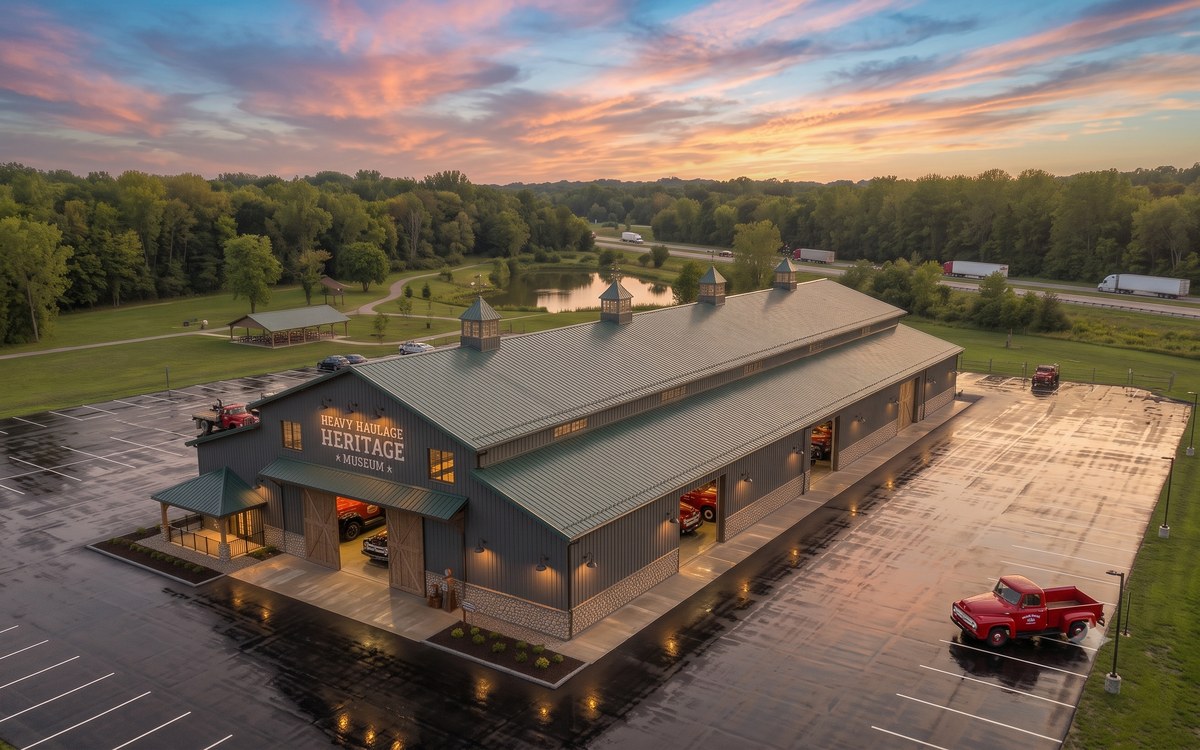
The full site from above, showing the exhibition hall footprint, parking and the hardstand where working trucks can be displayed outdoors.
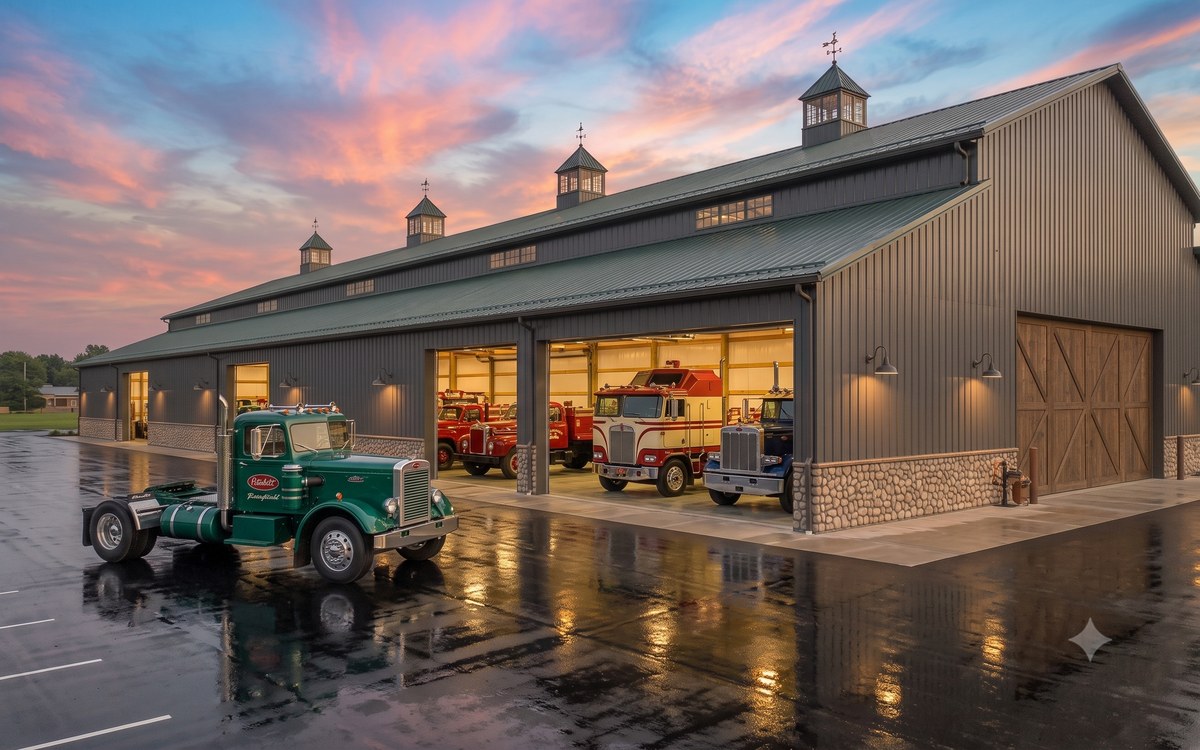
The length of the building, sized so a full road train can be brought inside and displayed complete rather than broken into parts.
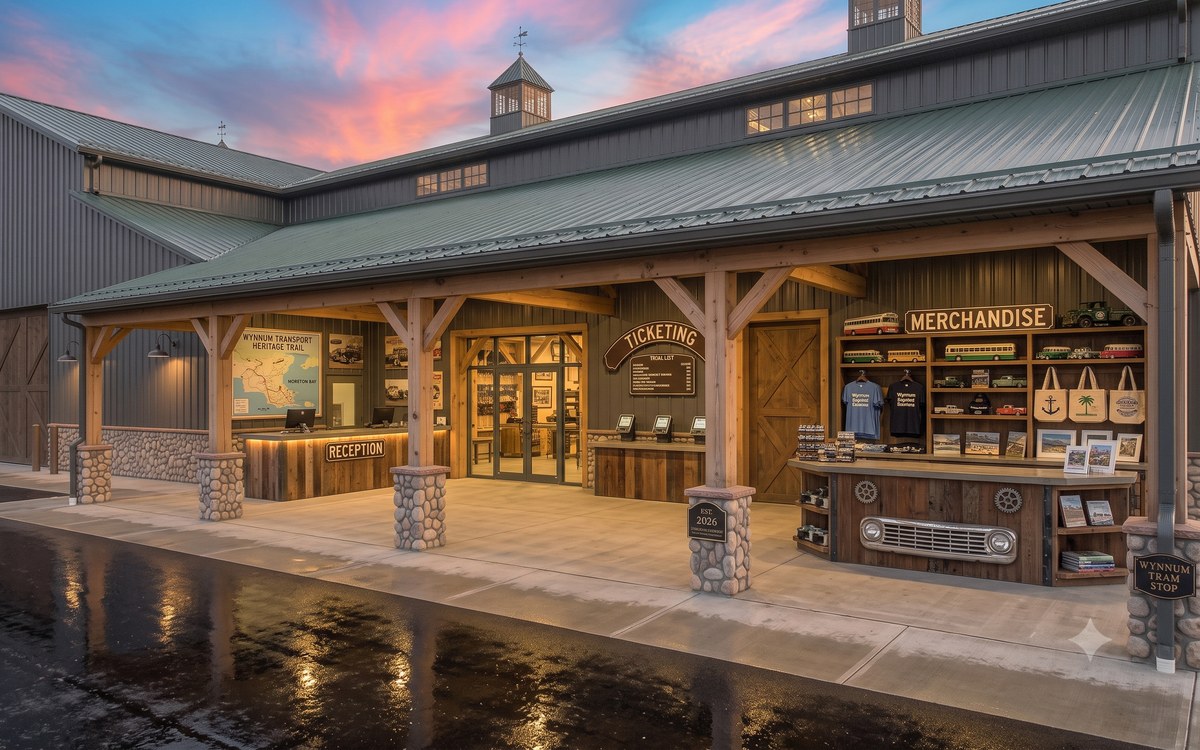
Reception, ticketing and the merchandise counter, opening directly onto the main hall so the first thing you see is the trucks.
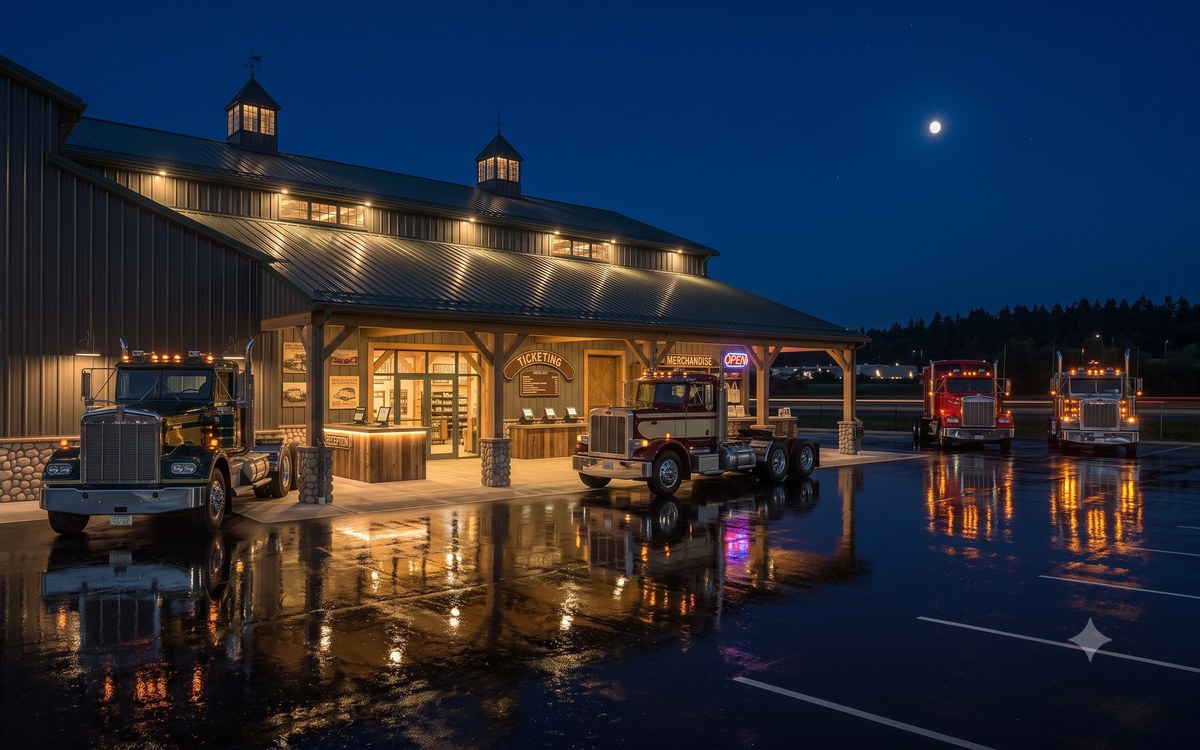
The building lit at night. The hall is designed to host functions, club nights and industry events well beyond opening hours.
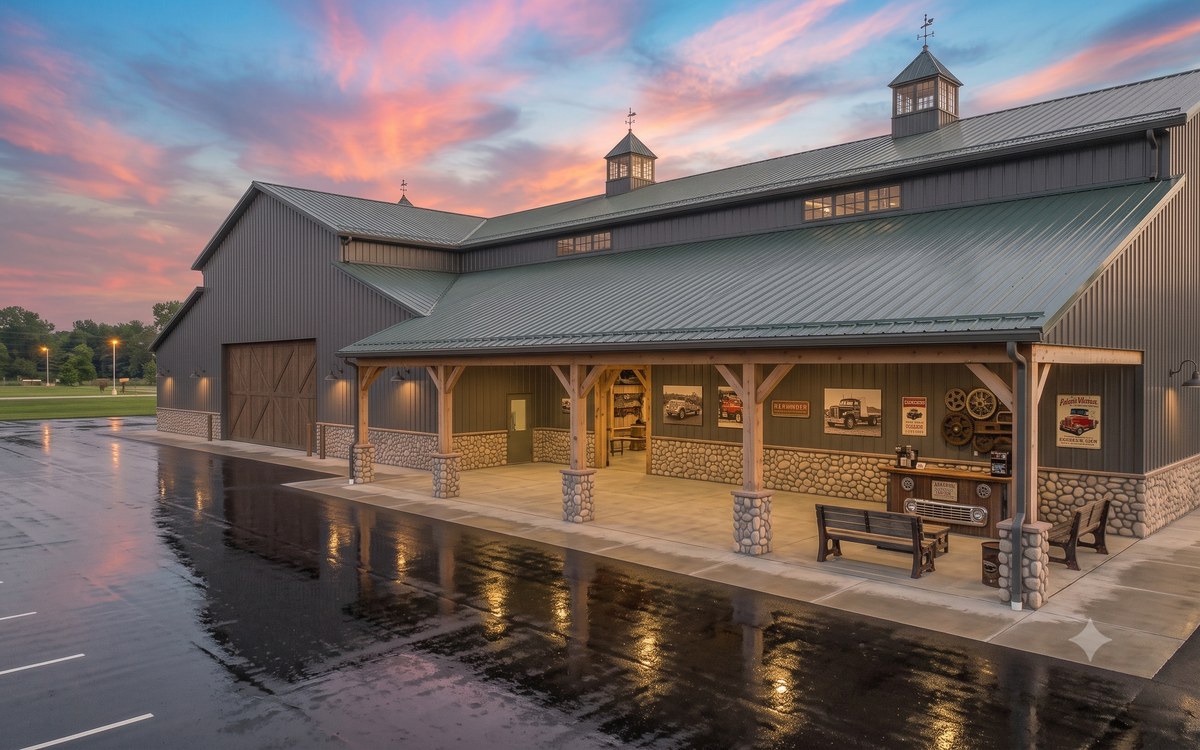
A sheltered outdoor area for rotating exhibits, open days and the machines that are simply too large to bring indoors.
Inside The Hall
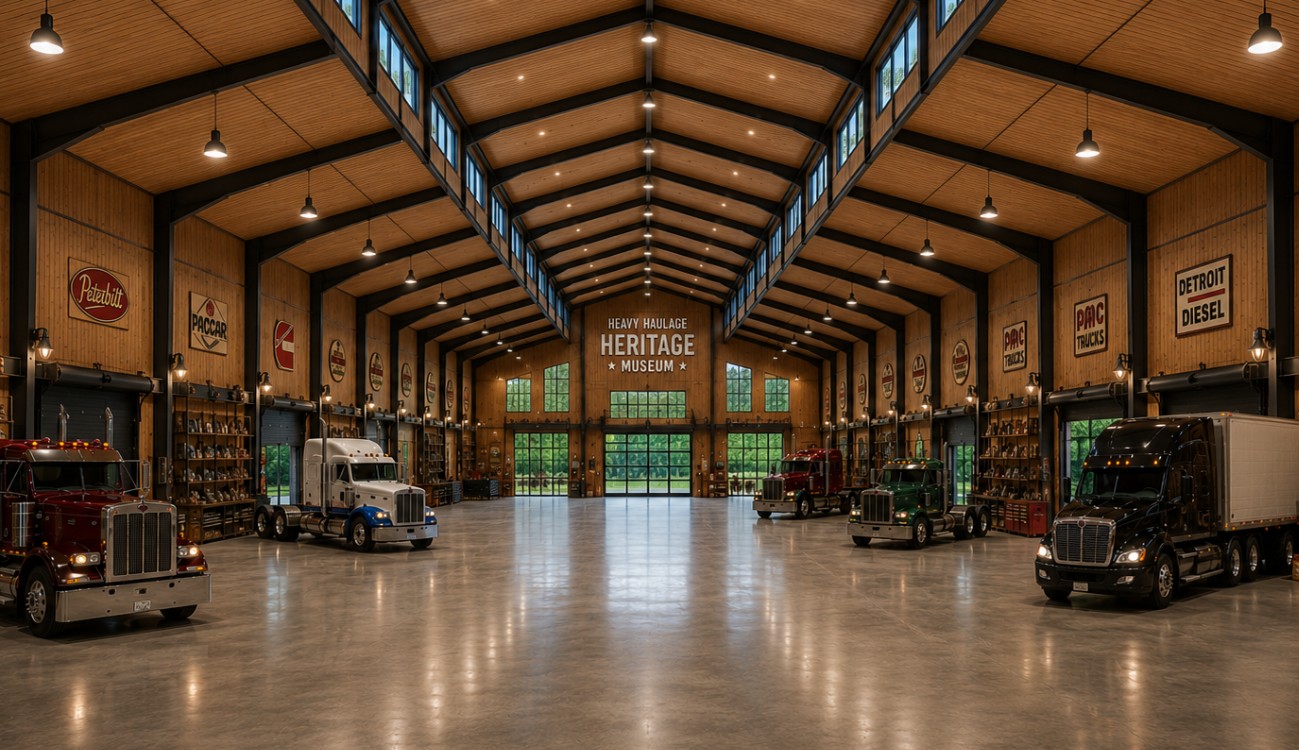
The main hall is built around clearance. Full height, full length, wide bays — so a restored prime mover and its trailers can sit together the way they ran, instead of being split up to fit the room.
Around the vehicles sit the stories: original photographs, logbooks, the fleet numbers and the families behind them. The trucks bring people in. The stories are what they take home.
Help Build It Become a memberWhat's Inside
This isn't a static collection. A full working restoration bay sits inside the building, where our team strips, rebuilds and revives the trucks that will eventually take their place in the museum. An elevated mezzanine walkway runs above the floor, so visitors can look down and watch the work happening in real time — sparks, engines, and all. The rigs you see being restored today are the exhibits of tomorrow.
A single covered span big enough to hold full-length road trains complete, with room to move around every rig rather than squeezing past it.
Restored prime movers and trailers shown the way they ran on the road — whole, not broken into parts to fit the room.
Original photographs, logbooks, fleet numbers and the families behind the machines — the history that gives every truck its meaning.
A space built to host club nights, open days, school visits and industry gatherings well beyond normal opening hours.
A place where the next generation can stand in the shadow of a road train and understand what these rigs, and the people who drove them, meant to this country.— Heavy Haulage Heritage Museum Founders